

The real price tag is 3-5x what you think, and it compounds daily
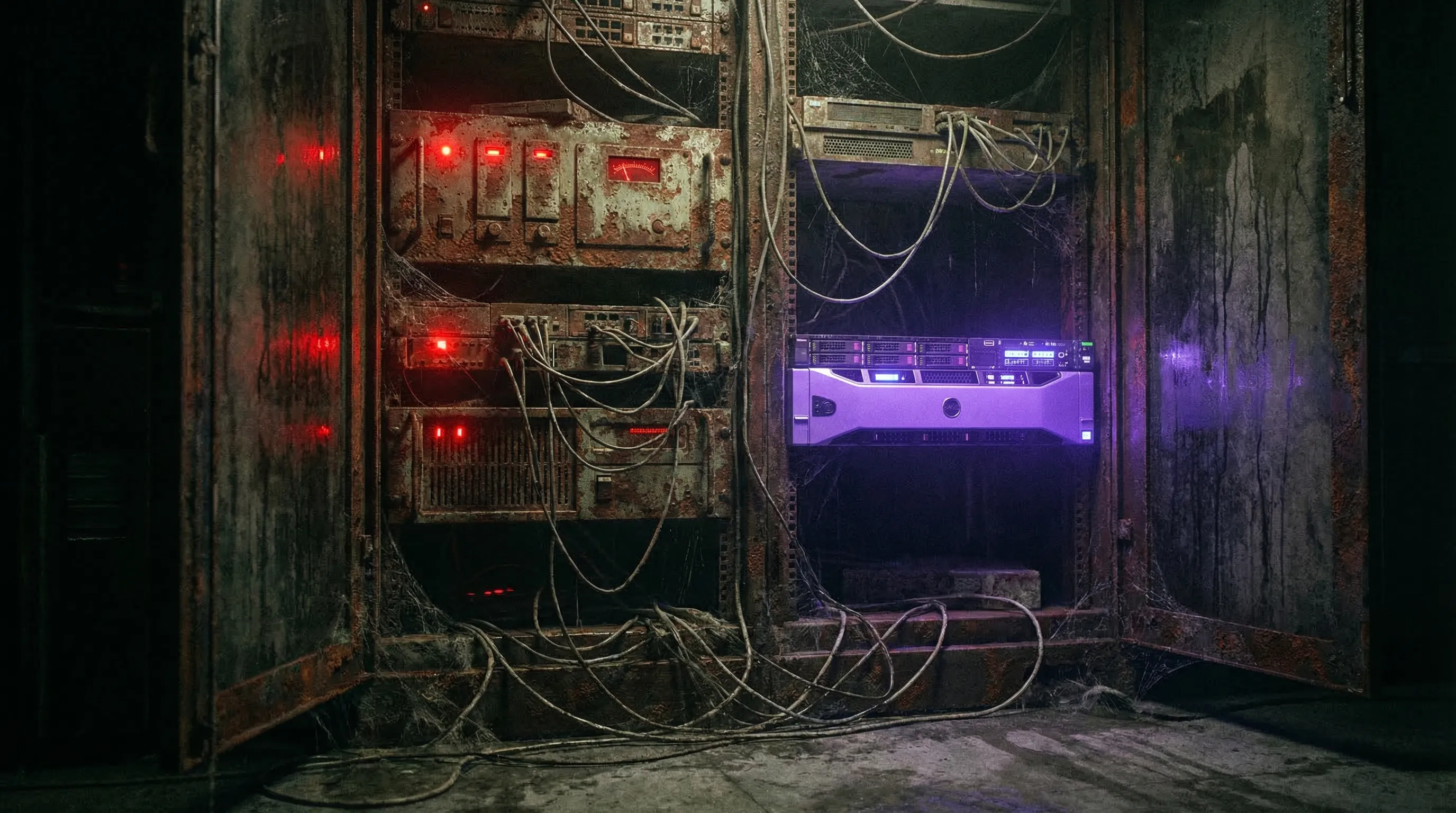
Legacy system costs is the core decision for any data-heavy application: you either prioritize real-time concurrency (Node.js) or deep data processing (Django). Here's a number that should make any CFO nervous: companies burn 60-80% of their IT budget just keeping old systems alive. Not improving them. Not adding features. Just maintenance. I'm talking about those 10+ year old platforms running on COBOL, VB6, or that custom PHP framework someone built in 2008. The ones where adding a simple API integration takes three sprints and a prayer. These systems share a few traits: documentation exists mostly in Gary's head (and Gary retired), new hires need months to understand the codebase, and every deployment feels like defusing a bomb.
The real damage happens outside IT budgets. When your order processing system goes down, you're hemorrhaging $5,600 every minute, that's $336,000 per hour of pure revenue loss. But downtime is just the obvious cost. What about the deals you lose because your sales team can't pull real-time inventory data? Or the customers who bounce because your checkout process feels like it's from 2005? We recently rebuilt a 30-year-old aviation platform for VREF that was losing deals simply because inspectors couldn't access data on tablets. Legacy systems create this cascade of invisible costs across sales, operations, and customer retention that never show up in your maintenance line items.
Most executives think legacy modernization is about technology. Wrong. It's about revenue protection. Your competitors are deploying AI-powered pricing models while you're still updating Excel sheets. They're processing customer data in milliseconds while your batch jobs run overnight. The gap compounds daily. One client told us they discovered their legacy inventory system was costing them $2M annually in oversupply, not from bugs or downtime, but because it couldn't integrate with modern demand forecasting tools. That's the reality: your legacy system isn't just old tech. It's a revenue leak that gets wider every quarter.
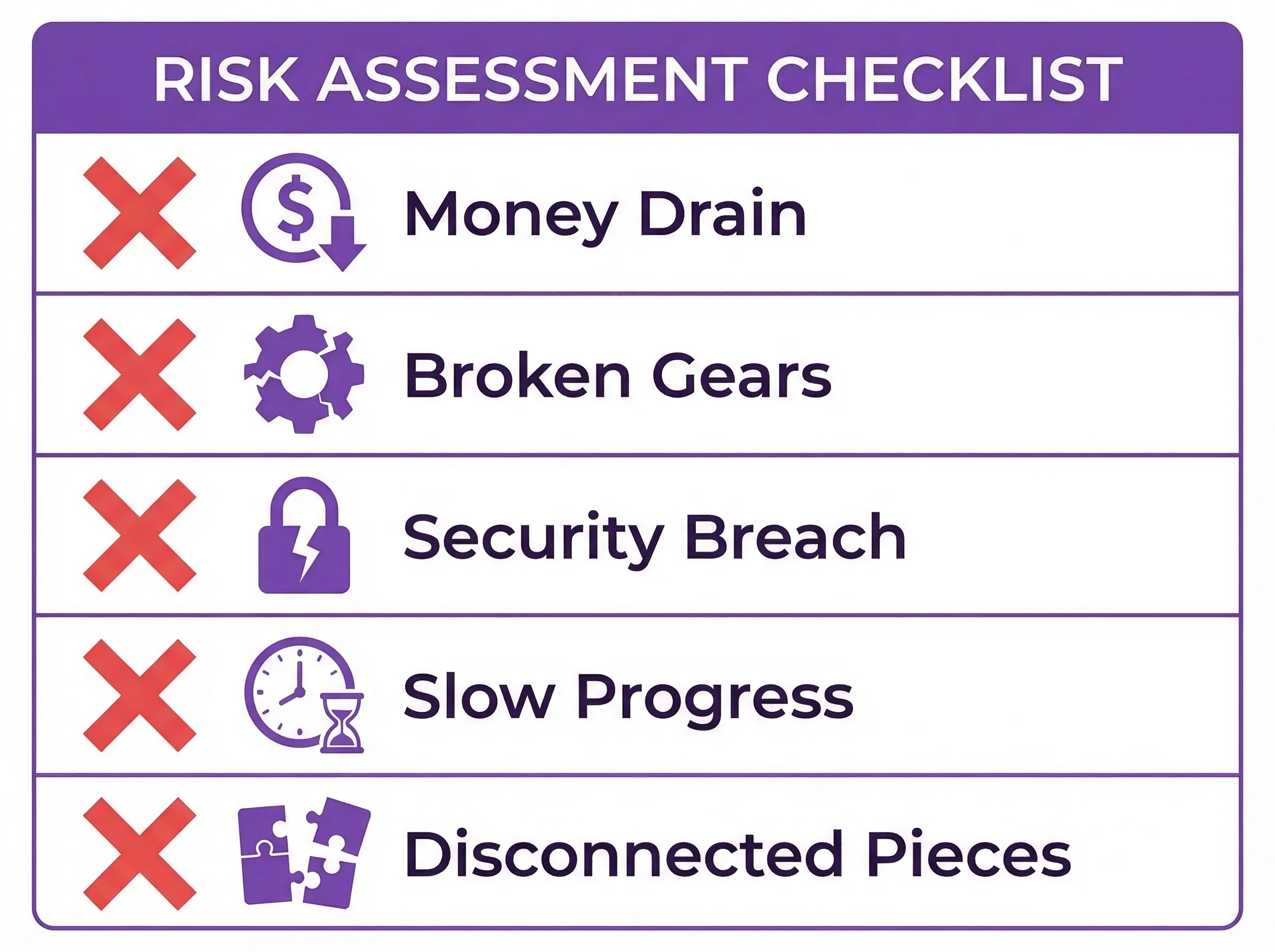
Track where your engineering hours actually go. If maintenance tickets outnumber feature releases 3:1, you have a problem. Stack Overflow's 2024 survey found legacy systems require 2.5x more developer hours just to keep running. That's $175/hour talent debugging COBOL instead of shipping products.
Count the spreadsheets. If your team downloads CSVs, copies data between systems, or manually reconciles reports, you're burning cash. PwC found companies waste $1.2M annually on these workarounds. One client discovered three employees spent 30 hours weekly moving data their 1990s system couldn't handle.
Modern teams ship features in 2-week sprints. Legacy systems? Six months minimum. BCG's research shows companies with modern platforms launch products 5x faster. When adding a simple payment method requires touching 47 different files across three systems, you're losing to competitors who deploy daily.
Can you see a customer's complete history in one screen? If sales uses one system, support uses another, and billing uses a third, you're missing revenue opportunities. Disconnected data means your team can't spot upsell patterns or churn risks. Modern platforms unify this data in real-time dashboards.
Every update breaks something. Your team tests for weeks because that Oracle 8i database has undocumented dependencies everywhere. Verizon's 2024 report shows 78% of breaches exploit systems over 5 years old. When patching means downtime, companies stop patching. That's when hackers win.
Your legacy system is a black hole for developer time. I've seen teams burn 2.5x more hours just keeping ancient codebases alive compared to building on modern stacks. One client was spending $1.2M annually on manual workarounds alone, Excel sheets to bridge database gaps, overnight batch jobs that failed half the time, and three full-time employees whose only job was data reconciliation. The math is brutal. When 92% of IT decision makers admit their legacy systems block digital transformation initiatives, you're not just paying for maintenance. You're paying to stand still while competitors sprint ahead.
The contractor trap makes it worse. Last month, I talked to a CFO who paid $350/hour for a COBOL developer because nobody on staff understood their inventory system anymore. That's not an outlier, it's Tuesday. Legacy systems create knowledge monopolies where a handful of expensive specialists hold your business hostage. We rebuilt VREF Aviation's 30-year-old platform and eliminated their dependency on two contractors who were billing $180K yearly just for basic updates. Modern frameworks like React and Django have massive talent pools. Your hiring costs drop 40-60% when you're not hunting unicorns who know dead languages.
Security makes the bleeding worse. IBM's 2024 report shows organizations on legacy systems face 3.6x more breaches than those running modern infrastructure. Each breach averages $4.45M in costs, not counting the revenue hit from downtime and lost customer trust. But here's what kills me: teams know this. They see the risk reports. They watch the maintenance budget grow 15-20% yearly while feature delivery flatlines. The maintenance-only mindset becomes corporate culture. Innovation dies because every sprint is about keeping the lights on, not building what customers actually want.
The real cost isn't in your IT budget. It's in the deals you lose because your sales team can't access customer history during calls. One aviation company discovered their 30-year-old system was costing them $3M annually in missed upsells alone.
Your support tickets tell a story. When 87% of customer complaints trace back to legacy system limitations, you're not dealing with isolated incidents, you're watching revenue walk out the door. Every "the site is too slow" complaint represents a customer who almost certainly abandoned their cart. That 520 hours per employee wasted on manual processes? It's not just an HR problem. It's your sales team manually entering orders because your system can't handle bulk uploads, your support staff copy-pasting between screens because nothing integrates, and your customers waiting on hold while someone literally prints and re-enters their information. McKinsey pegs this at $26,000 per worker annually, but that's before counting the customers who hang up and buy from someone else.
The specifics hurt more than the statistics. Mobile traffic accounts for 58% of web visits, yet legacy systems built in 2005 treat responsive design like an afterthought. Your search function returns 200 irrelevant results because it can't handle natural language queries. Self-service portals require six clicks to reset a password. Meanwhile, your competitor launched a React-based platform that loads in under two seconds and lets customers modify orders without calling support. I saw this firsthand with VREF Aviation, their 30-year-old platform forced aircraft brokers to call in for pricing updates. Post-rebuild with Next.js and automated OCR extraction, those same brokers now pull real-time valuations from 11 million records without human intervention.
Here's what kills me: businesses know their systems frustrate customers but rationalize it as "good enough." It's not. IDC found companies that bit the bullet and modernized their legacy systems saw 35% revenue growth within 18 months. Not from adding features, from removing friction. Your legacy system isn't just slow; it's actively hostile to how people work today. Every manual process, every five-second load time, every "please call us to complete your order" message is a revenue leak you've normalized. Modern frameworks like Django and Node.js aren't fancy new toys. They're table stakes for keeping customers who expect Amazon-level experiences from a $10 million business.
78% of data breaches last year involved systems over 5 years old. That's not a coincidence. Legacy platforms run on outdated frameworks that stopped getting security patches years ago. Your 2015 Java app? Oracle ended public updates for Java 8 in 2019. Windows Server 2012? Microsoft cut off mainstream support in 2018. Each unpatched vulnerability is a ticking time bomb, and hackers have automated tools scanning for these exact weaknesses 24/7.
The financial hit goes way beyond ransom payments. When Target's legacy payment system got breached in 2013, they lost 46% of their profit that quarter. Not from the hack itself, but from customers switching to competitors. Accenture found that 74% of businesses lost customers to competitors specifically because legacy system limitations made them vulnerable to breaches. Your customers won't wait around while you rebuild trust. They'll take their credit cards to whoever kept their data safe.
Patching these holes isn't simple either. Legacy system integration costs are 4x higher than modern API-based systems according to MuleSoft's latest report. You can't just slap a security layer on top of COBOL. Every patch requires custom development, extensive testing across brittle dependencies, and prayers that nothing breaks your 20-year-old business logic. Meanwhile, modern platforms get security updates automatically through managed services. The choice is binary: spend millions playing catch-up on security, or rebuild on infrastructure that's secure by default.
Don't wait for catastrophic failure to modernize. Systems degrade gradually, then suddenly. That mainframe running smoothly for 20 years will crash on a random Tuesday, and the only developer who understood it retired in 2019.
Sixty-three percent of companies can't access real-time data because their legacy systems are stuck in batch-processing hell. That's $2.5 million in missed opportunities annually, according to Forrester's 2024 report. Your competitors adjust prices every hour based on demand signals. You're still waiting for last night's batch job to finish. The gap between what happens in your business and when you know about it is where revenue dies.
I've seen this pattern dozens of times. E-commerce companies watching inventory levels from yesterday while stockouts happen today. B2B platforms that can't personalize pricing because customer data lives in three different systems that sync overnight. Airlines that can't dynamically adjust fares because their pricing engine runs on mainframe COBOL that processes once every 24 hours. VREF Aviation faced this exact problem with their 30-year-old platform until we rebuilt their system to extract insights from 11 million aircraft records in real-time.
The operational cost alone is brutal. Aberdeen Group found businesses running systems over 10 years old face 47% higher operational costs. But that's just the visible damage. The invisible cost is every customer who bounced because your site showed "out of stock" when you had inventory. Every deal lost because your sales team quoted yesterday's price. Every opportunity missed because your dashboards show last week's metrics while your competition moves in milliseconds.
Your finance team runs payroll in one system. Sales tracks deals in another. Customer data lives in a third. Getting these systems to talk? That's where legacy architecture shows its teeth. Modern platforms ship with REST APIs and webhook support built in, but legacy systems need custom middleware, ETL pipelines, and consultants who charge $250/hour to write SOAP XML transformers. The math hurts: companies burn 60-80% of their IT budget just maintaining these patchwork integrations, according to Deloitte's 2023 technology spend analysis. That's money that should fund new features, not duct tape.
I watched a manufacturing client blow $180,000 trying to connect their 2008-era inventory system to Shopify. Six months of development. Three different consultants. The final solution? A Windows service that scraped HTML tables every 15 minutes and pushed CSV files to an FTP server. Meanwhile, we built the same integration for another client using Supabase's real-time subscriptions in two days. The difference isn't developer skill, it's architectural reality. Legacy systems weren't built for a world where every business runs on 20+ SaaS tools.
The real killer is opportunity cost. Every hour your team spends fighting integration fires is an hour not spent on features that make money. Modern stacks like Django REST Framework and Next.js API routes make new integrations simple, often just a few lines of configuration. Legacy systems turn basic tasks into engineering marathons. One retail client told me they avoided adding payment providers because each integration took 3-4 months. Their competitors, running modern platforms, add new payment methods in days. That's not a technical limitation. It's a revenue ceiling.
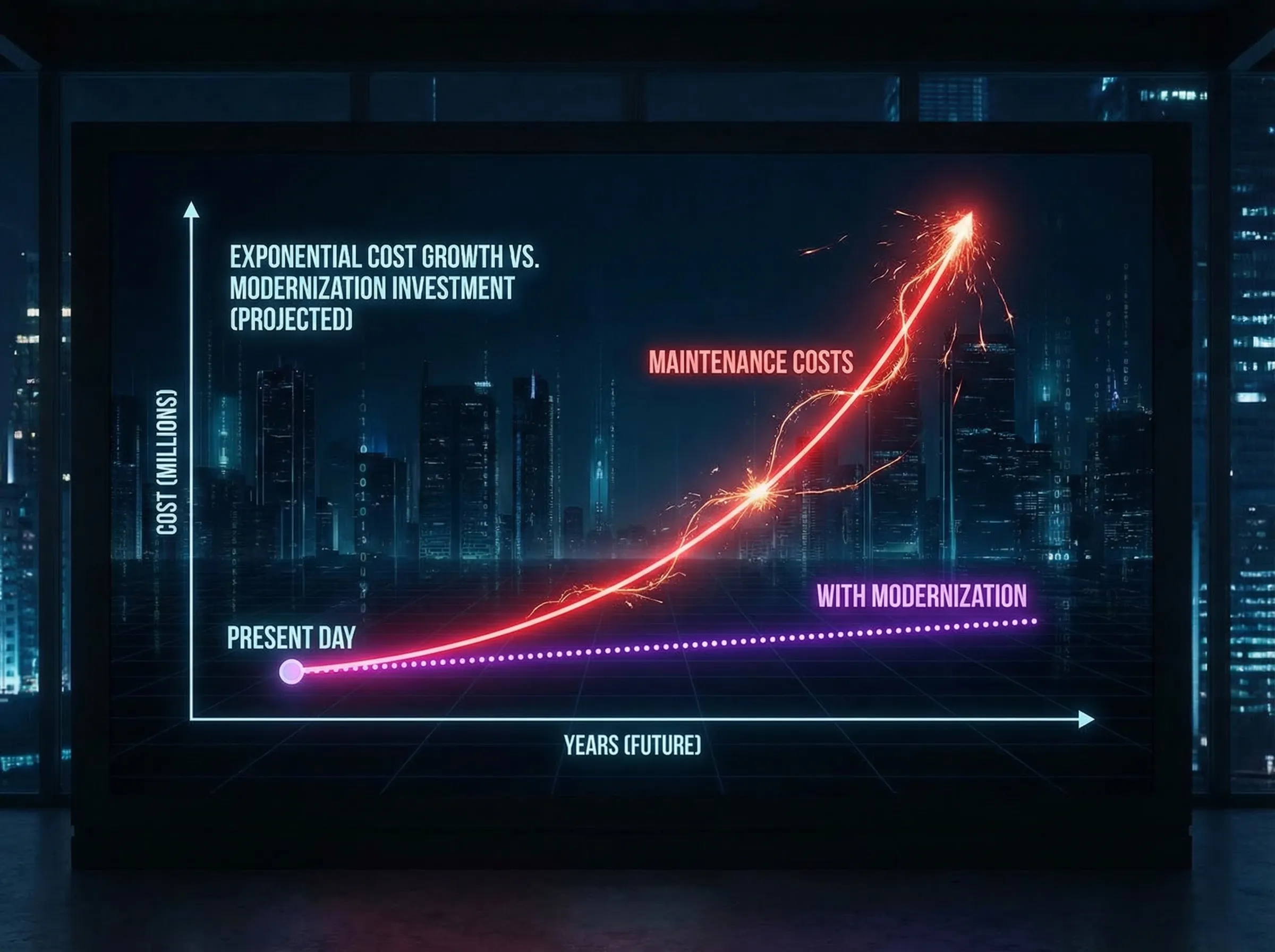
Here's the number that gets CFOs' attention: companies that bite the bullet on modernization see 35% revenue growth within 18 months. That's not a projection or best-case scenario. It's what IDC tracked across 487 companies that replaced systems older than 8 years. The math breaks down into three buckets. Infrastructure costs drop 68% when you stop paying for mainframe licenses and move to cloud-native architecture. Training new hires takes 40% less time when they're using React instead of COBOL. And here's the kicker, feature deployment accelerates by 5x, which means you're shipping revenue-generating capabilities every two weeks instead of every quarter.
VREF Aviation learned this the hard way. Their 30-year-old platform was burning $180K annually just to keep the lights on. We rebuilt their entire system, including OCR extraction for 11 million aircraft records, and their revenue jumped 42% in year one. Not because we added bells and whistles. Because their sales team could finally demo features that worked, their ops team stopped firefighting daily crashes, and their customers could actually access data without calling support. The rebuild paid for itself in 14 months.
Most companies get the ROI timeline wrong. They expect immediate returns or assume it'll take 3-5 years to break even. Reality sits at 12-18 months for a full platform rebuild. The mistake is calculating only direct cost savings. You have to factor in competitive wins, reduced churn, and faster time-to-market. When 92% of IT decision makers admit their legacy systems block digital transformation entirely, modernization isn't an IT expense. It's a revenue investment with predictable returns.
"Every day you delay modernization adds 3% to the eventual migration cost. Legacy systems don't age like wine. they age like milk."
Horizon Dev audits technical debt and builds migration roadmaps that actually work. Book a free strategy call at horizon.dev/book-call
Book a Free Strategy CallCEO & Lead Architect at Horizon Dev
Austin Reed builds custom platforms for data-intensive businesses. He founded Horizon Dev after spending years watching companies bleed money on systems that should have been replaced years ago. His team has rebuilt legacy platforms for aviation companies, enterprise clients, and fast-growing startups.